Saturday, April 18, 2015

Nobelist Talks about Exercise and Chromosome Integrity

I've always known that longer telomeres in our cells was an indication of health.  I've also known that as we age our telomeres get shorter, so the DNA in our cells are less protected from mutation.  I just heard this Scientific American 60 Second Science podcast (see below)

Nobelist Talks about Exercise and Chromosome Integrity - Scientific American  I'm amazed that exercise apparently can restore, or increase the length of the telomeres and, in effect, reduce the effect of aging. Elizabeth Blackburn won a nobel prize for her research on telomeres

Scientific American has The entire 27-minute Google Hangout with Mariette DiChristina and Nobel Laureate Elizabeth Blackburn is on their Web site. Just google Hangout and Elizabeth Blackburn.  Other research done at UCSF has now shown that telomere length can actually be reversed with exercise and a healthy lifestyle

Monday, April 13, 2015

Fried and grilled meat may raise risk of diabetes and dementia | Science | The Guardian

This appears to be another potential breakthrough on diet, health and ageing.

Fried and grilled meat may raise risk of diabetes and dementia | Science | The Guardian

I never understood why some people seem to get alzheimers, and others don't.  Why some get diabetes, and others don't.  It may be partially caused by genes.  However in so many cases, it doesn't seem to be directly related to inherited traits.  Yes, it could be caused by being overweight, over eating, too much sugar etc.  But there are so very many people who eat poor diets who don't "catch" these horrible diseases.

Maybe these scientists are on to something.  However there needs to be a lot more work to identify the "smoking gun" at the cell-mechanism level to understand why this is true.

The sad thing is that all of these dietary recommendations seem to infringe on the pleasure we get from eating.


Saturday, April 11, 2015

Dogs trained to detect prostate cancer with more than 90% accuracy | Society | The Guardian


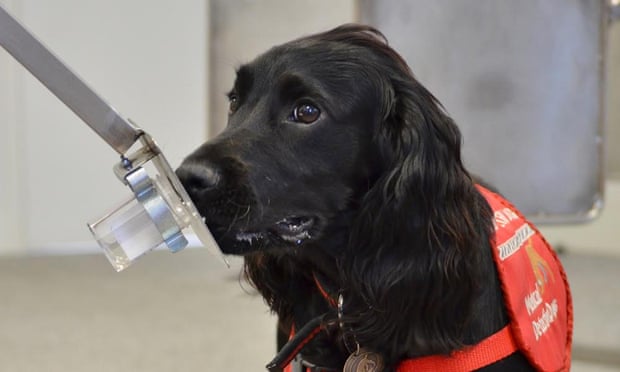
The Guardian had an article by James Meikle that described an experiment done in Milan Italy using dogs to detect prostate cancer.  This experiment seems to prove that it will be possible to detect prostate cancer using smell.  Yes, it would be good to train dogs to detect disease.  That could be a lot better than many of our current medical screening systems.
Dogs trained to detect prostate cancer with more than 90% accuracy | Society | The Guardian

There have also been tests demonstrating similar capability to detect lung cancer using smell. (see this link)  If we can build an electronic "sniffer" that can discriminate the various scents (see this link), we may be able to use it to diagnose many other diseases, in addition to cancer.  The world needs a simple, low cost, non-invasive screening system to identify diseases while in the early stages.  It could also help for maintaining quarantines, since it would provide a quick screening technique to use at borders.

I sure hope that governments are providing adequate incentives to accelerate this technology. It appears that NIH is participating this test in Israel.   If such a device could be built to reliably screen for many types of diseases using only smell, the overall cost of medical care in the world would go down, and the quality of health could go up, because of more accurate earlier diagnosis.